Duration
120 Hrs
Skill Level
Beginner to Advanced
Mode
Online + Offline
Projects
8+ Real-World Projects

This program is designed to help students and professionals learn how to collect, organize, analyze, and interpret data to support better business decisions. The training combines hands-on exercises, real-world projects, and industry standard tools rather than relying on theory alone.
You’ll learn data cleaning, data visualization, statistical analysis, dashboard creation, and reporting techniques that companies actually use day to day. The course works well for beginners, recent graduates, and working professionals looking to build or advance a career in analytics.
If you’ve been searching for data analytics courses in Pune, this program offers a structured learning path with expert guidance, practical assignments, and certification support to help you become genuinely job ready not just familiar with the tools.
Excel
Python
SQL
Numpy
Scikit Learn
Pandas
Matplotlib
Power BI
Statistics
Tableau
Zoho Analytics
Seaborn
MySQL
Jupyter Notebook
Starting or advancing a career in analytics comes down to real, applicable skills not just watching tutorials. Our program is designed for students, freshers, and working professionals who want to build strong analytical and business intelligence capabilities.
You’ll learn to collect, clean, analyze, and visualize data using tools like Excel, SQL, Power BI, Python, and Tableau through practical projects and real-world case studies. The training is built around data-driven decision-making, helping you develop the job-ready skills that top companies are actively hiring for — backed by expert-led sessions, placement support, and certification.
Hands-on training
Live projects
Industry experts
Placement assistance
Certification support
Career-focused learning
Data Collection & Data Preparation
Data Analysis & Business Intelligence
Advanced Analytics & Data Visualization
Projects, Certification & Career Support













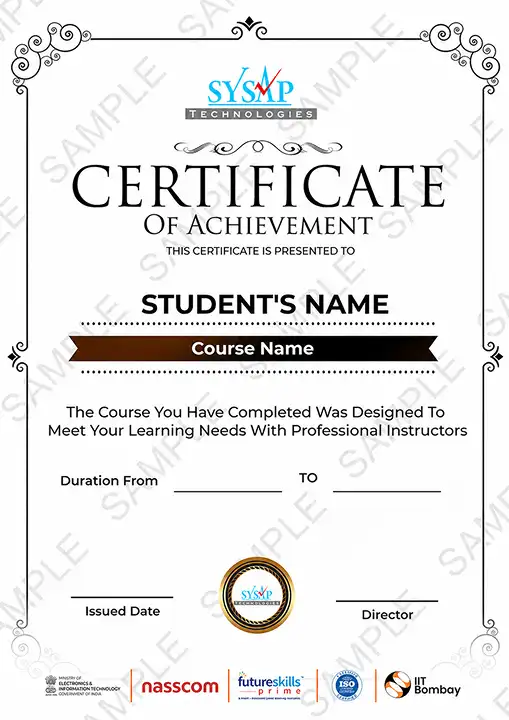
This certification validates real, practical skills in data collection, analysis, visualization, and business intelligence the kind employers actually look for. The program is built around real world projects and hands on training rather than passive learning.
You’ll work across Excel, SQL, Python, Power BI, Tableau, and data visualization techniques to prepare for today’s data driven industries. The certification demonstrates your ability to analyze business data, create meaningful reports, and support better decision making whether you’re a student starting out or a professional looking to move into analytics.
Get quick answers to common questions about the course, structure, and career support.
Data Analytics focuses on analyzing existing data to answer specific business questions and identify trends, typically using tools like Excel, SQL, and visualization software. Data Science is broader it includes analytics but also involves building predictive models, machine learning algorithms, and working with more complex, often unstructured, data at scale.
Not necessarily basic logical thinking and comfort with numbers is enough to start.
Excel, SQL, Python, Power BI or Tableau for visualization, and sometimes basics of statistics and machine learning.
The Data Analytics course at Sysap Technologies can typically be completed in 4 to 6 months, depending on the selected batch and learning mode. The program includes hands-on projects, practical training, and instructor-led sessions to help you build job-ready data analytics skills.
Salaries vary by experience, location, and industry, but entry-level data analysts typically earn a solid starting salary with strong growth potential as they gain experience often significantly higher than average entry-level roles in other domains, especially in cities with strong IT/tech hubs.
Common roles include Data Analyst, Business Analyst, Reporting Analyst, Junior Data Scientist, BI (Business Intelligence) Analyst, and Marketing/Operations Analyst across industries like IT, banking, e-commerce, healthcare, and retail.
Yes, data-driven decision making continues to be a priority across almost every industry, and demand for professionals who can turn raw data into insights remains strong, especially as more companies adopt AI and automation tools that still require human oversight and interpretation.